
“Think like a traveler” is a mindset in the field of design thinking. For example, Tom and David Kelley share in Creative Confidence:
Ever travel to a foreign city? We've all heard that "Travel broadens the mind." But beneath this cliché lies a deep truth. Things stand out because they're different, so we notice every detail, from street signs to mailboxes to how you pay at a restaurant. We learn a lot when we travel not because we are any smarter on the road, but because we pay such close attention…Too often, we go through day-to-day life on cruise control, oblivious to huge swaths of our surroundings.
This summer, our daughters’ activities (mis)aligned, leaving us with only a week available for travel (to the grandparents, of course!). So, for once, we haven't traveled anywhere new this summer. A little part of me relished the closer-to-home adventures and time for book writing.
But as I enjoyed a piece of White Rabbit candy from Shanghai, gifted to me by a summer research student, it took me on a little trip. The graphic design of the outer wrapper, the edible inner rice paper wrapper, and the milky candy each felt so distinct from what we find in the US.
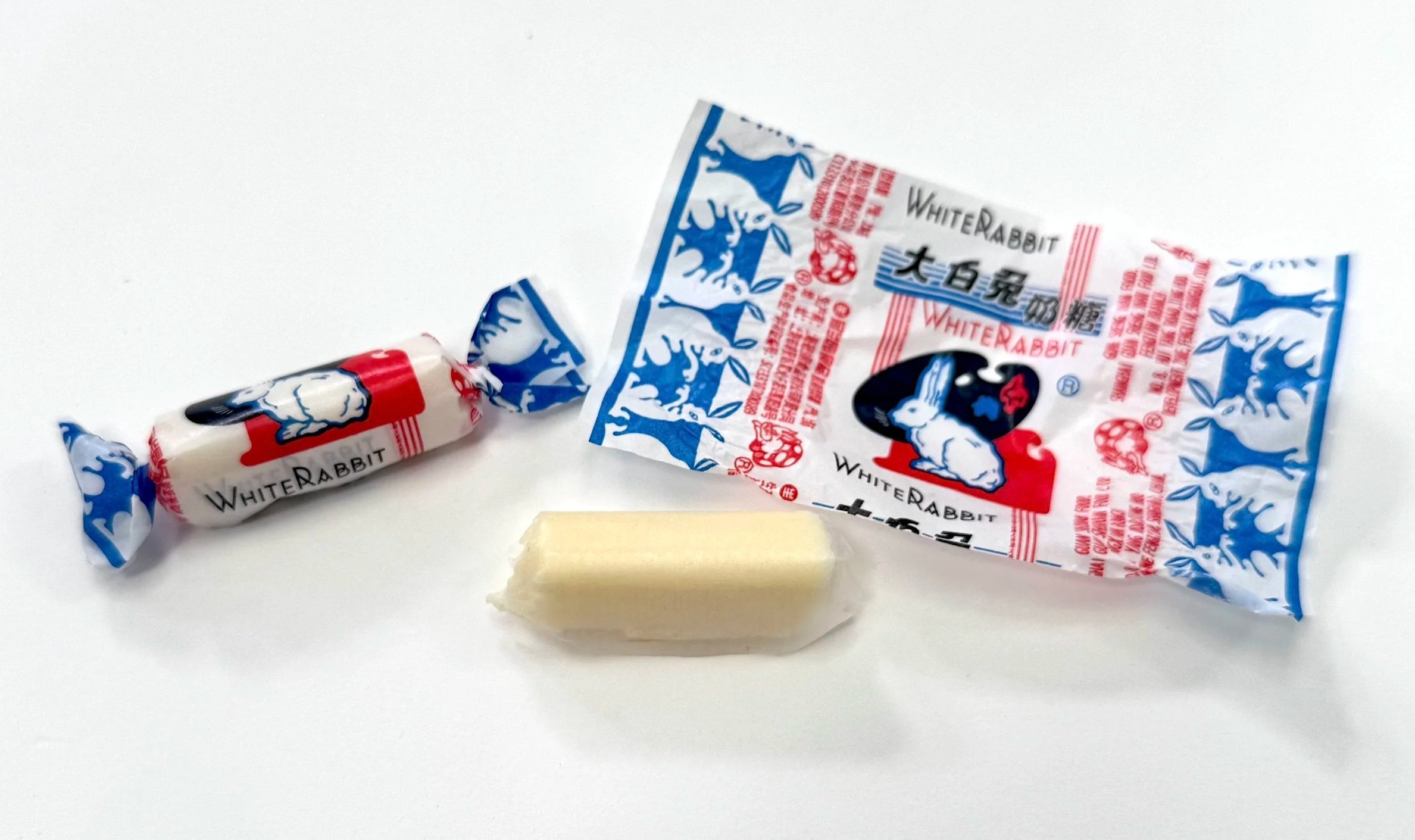
White Rabbit candy, an iconic, chewy milk candy from Shanghai, China
This trip was partly a trip back—to my six months working at IDEO Shanghai. Walking to work each day, seeking to see, learn, or eat something new each time, and seeing life unfold and evolve over a half-year on the handful of different routes I’d take. Working with my incredible Shanghainese colleagues. Wandering around the city, enveloped by the warmth of the people, whether we communicated in English, my limited Mandarin, or bidirectional exchanges of broad smiles, quizzical looks, gestures of explanation, and nods of acknowledgment—Ah, that’s what this is for, thank you! It was altogether a transformational experience, and I’ve loved returning several times since.
“Thinking like a traveler” activates the everyday punctuation marks and other human tools always that help us go deeper and further in any challenge.
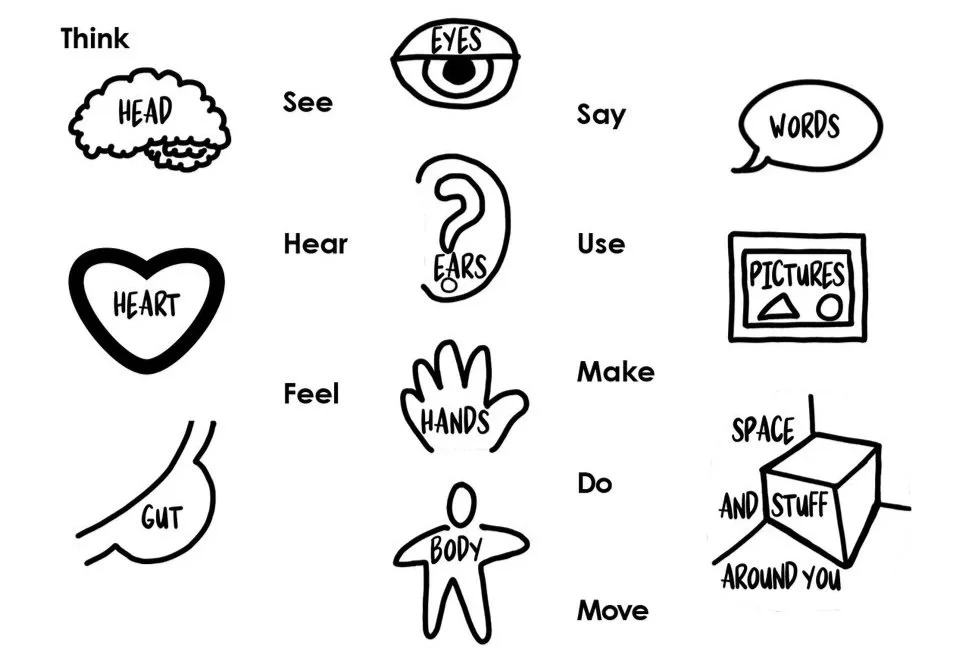
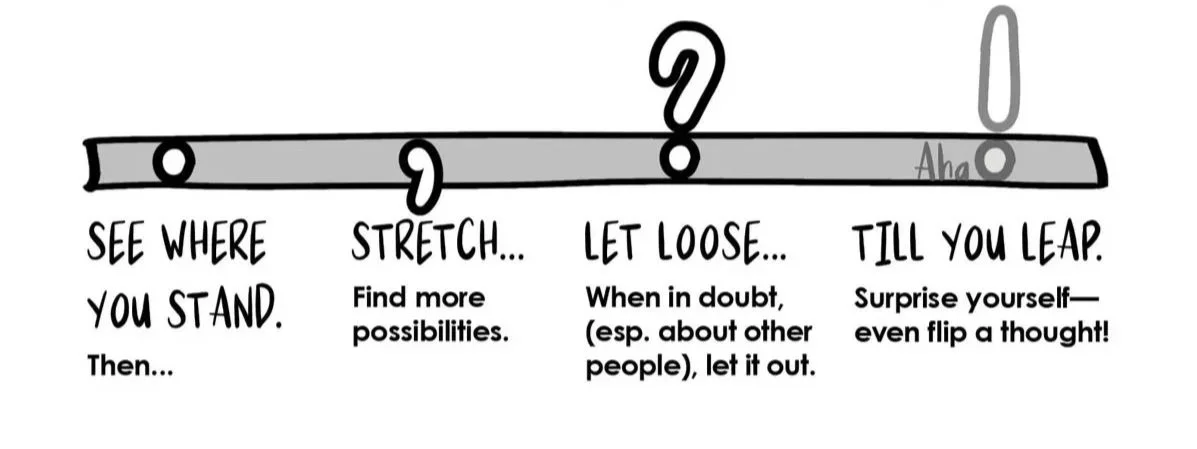
Punctuation Marks & Human Tools from the Core Toolset (Black-and-White version).
When we travel to new places—far-flung or not—the “10+ human tools” we have in and on us in our own, unique ways spring into action. We see with fresh eyes everything and everyone around us. We hear sounds unique to the human language, social fabric, and natural landscape of where we are. We take time to try our hands at new things, to taste all there is to offer—food that revives our palates, minds, bodies, and souls. Our hearts find love for new people and things. We expand our repository of personal experience that “gut instinct” draws on. And much more
Where there were periods in our minds about how things have to be, these experiences insert commas—so many more ways things can be—especially when we practice putting question marks on our first assumptions or judgments about what we see. We even may come to flip a view or two—or even have an “aha!” about what’s happening, matters most, or ways forward in our own lives and work.
Shortly after this experience and writing this post—followed by many more hours of book work—I found I needed an outdoor break. I was briefly frustrated that I didn’t have time to go further than my usual neighborhood park. But, as often happens, once I stepped out the door, “Think like a traveler” kicked in.
I put a question mark on my “same-old, same-old park” assumption—and opened my eyes to see the new flowers that had bloomed since my visit just a few days earlier, new people around me, and more.
We grow immeasurably as we go through the world thinking like a traveler. What might this mean for you right now?