
I’m always so grateful to hear where people have taken Innovators’ Compass and where it’s taken them.
The team from Kyiv School of Economics is partnering with Olin College, where I am an Academic Partner, to apply student-centered design as they build out a new undergraduate engineering program. It was an honor to work with Daniel Koff of Olin and Nastasia Klen of KSE to create a half-day Compass-based workshop for them.
Though it was late in their time at Olin (with many late nights), Georgiy Shevchenko, Vice Rector of Academic Affairs and Dean of the Computer Science Department, brought incredible energy to the day. And he brought Innovators’ Compass home with him to KSE, which he describes as having a “growth environment: ambitious goals, high standards, vibes of experimentation and disruption.”
I’m so grateful that he shared back:
Hi Ela,
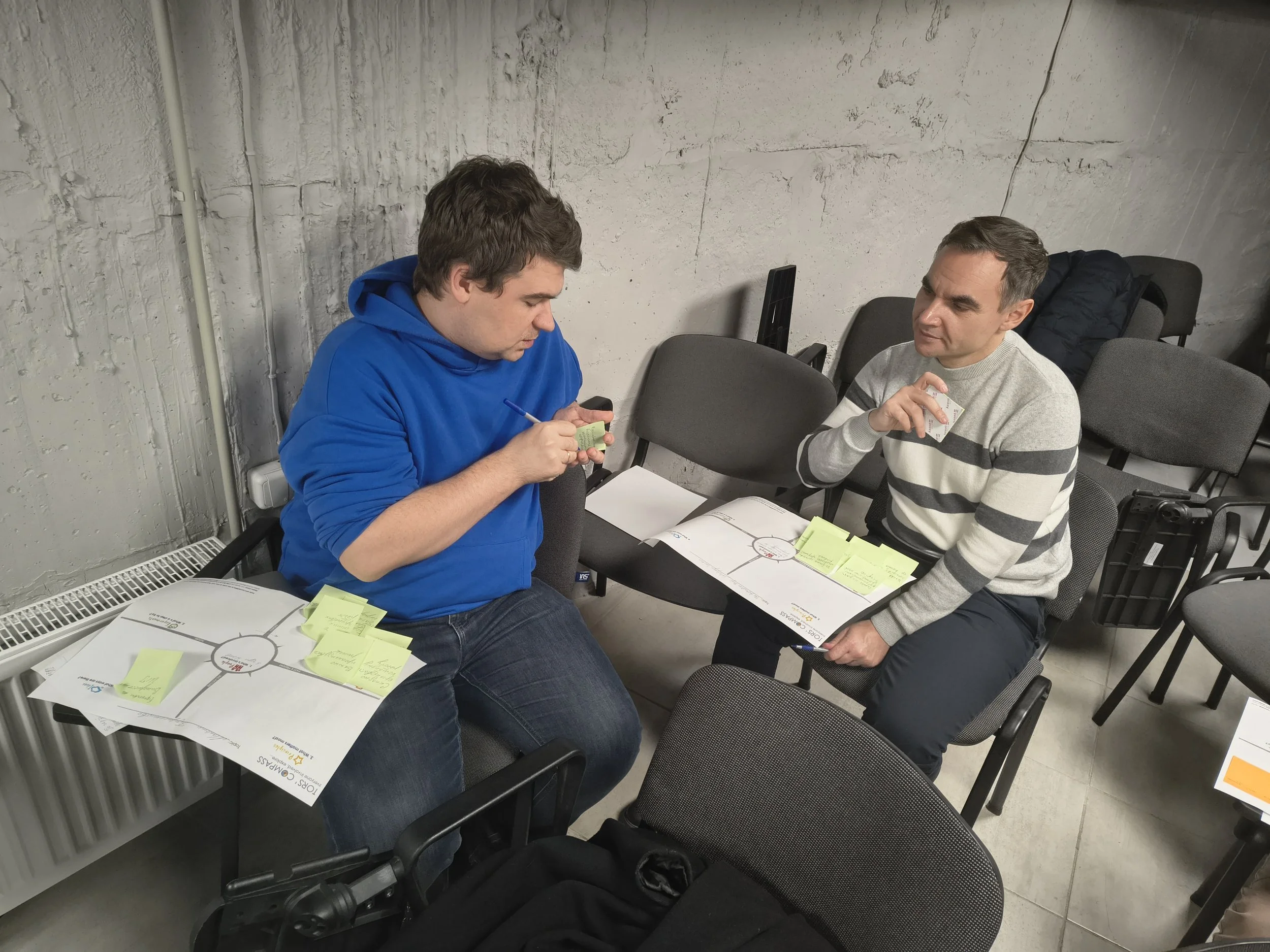
Just wanted to thank you for Innovators' Compass! We've used it already in our discussion of the Theoretical Computer Science minor, and I'm using it in my course 'Once upon a Syllabus.'
I’ve attached several photos. As you can see, we’re in shelter, where there are no normal tables. In this case, there were just no free classrooms, but if there was an alert, we’d have to vacate classrooms and continue in shelters.
Our university is quite dynamic and fast-growing—we have 10x more students than 4 years ago. Our department is not even one year old, and more than doubled this year.
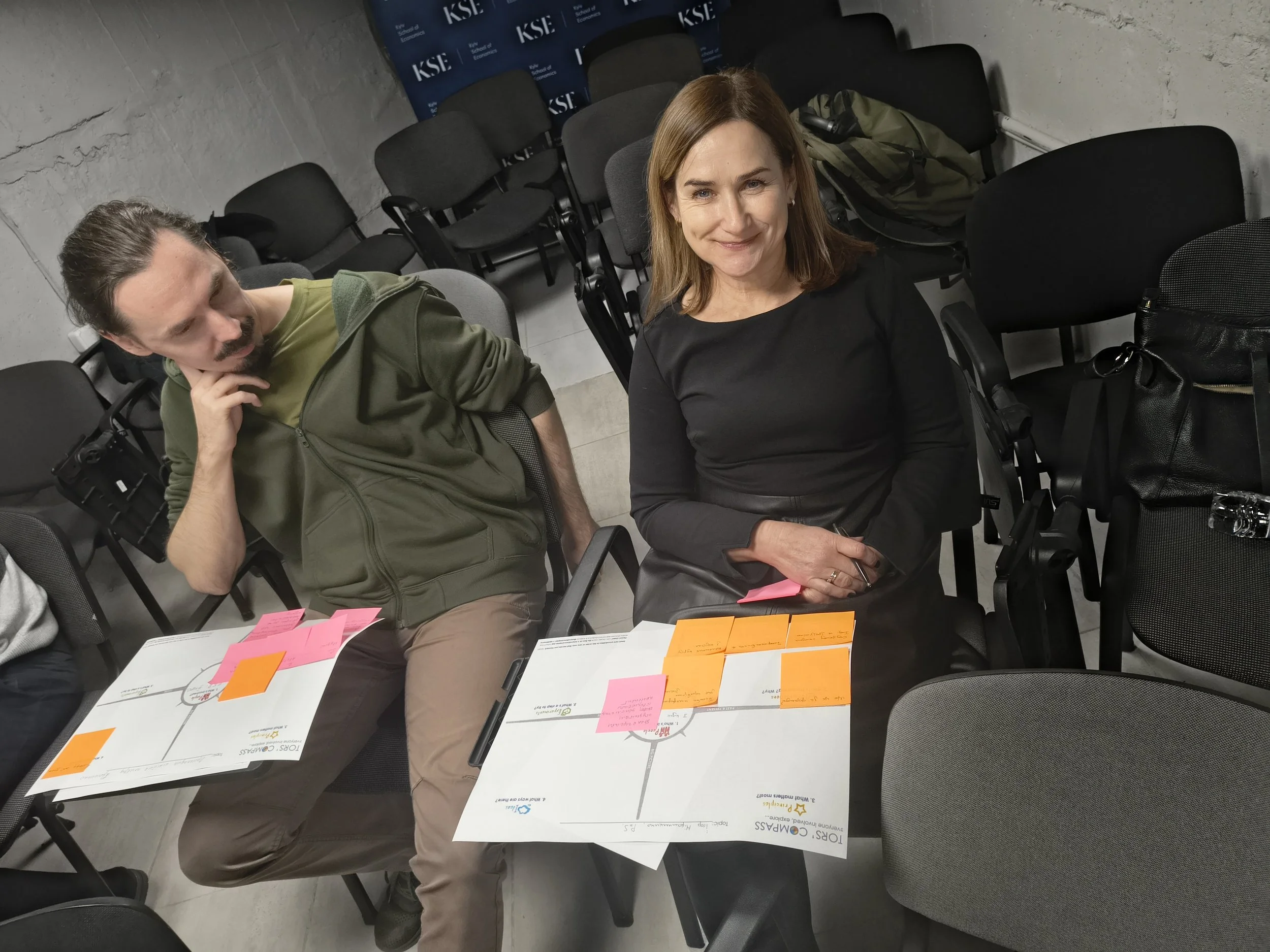
For things like creating a first draft of the Theoretical Computer Science minor discussion, the Innovators’ Compass is quite helpful to facilitate a discussion and create alignment. Where we are now? What do we speak about? What do we agree upon? Where do we see the things different? Of course, there are many other tools, but this one really helps to keep people engaged, focused, not diverge from the topic, to understand what is happening right now, etc.
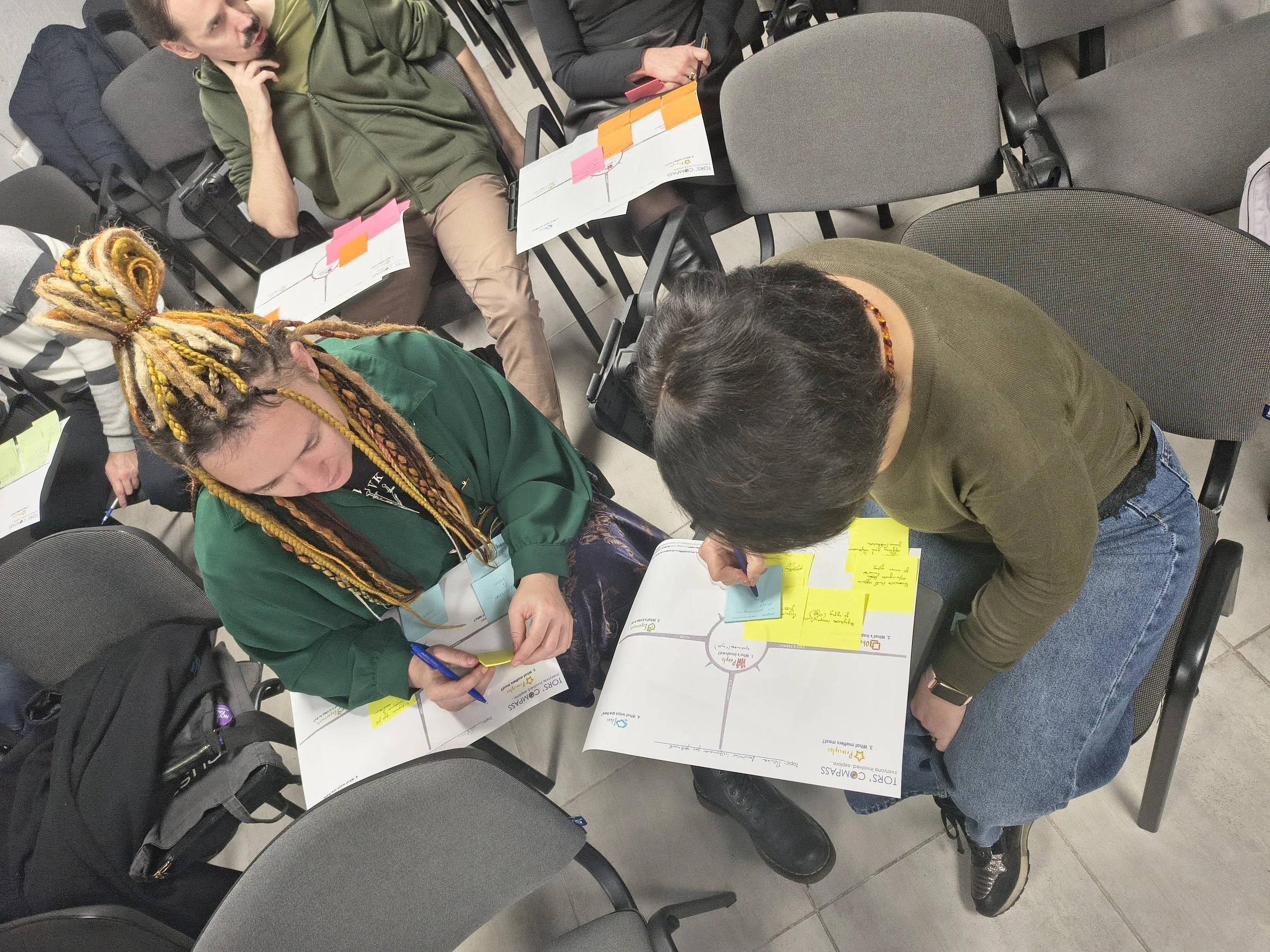
For the ‘Once Upon a Syllabus’ course, I used it for the penultimate class, where we spoke about innovations and micro (small, low-risk, reversible) experiments in course design. Here, we moved from observations to the ideas, then (real quick) principles, then experiments. Usually, we wouldn’t have come [all the way] to the experiments. And, we worked with colleagues , which is rare—faculty usually work on courses by themselves. Here they have particular questions/problems and they started to come up with things with colleagues around them that they wouldn’t come up with on their own - and somehow realize not to do everything alone.
Overall, it is a very versatile tool which can be used for many purposes.
Georgiy Shevchenko
Vice-Rector for Academic Affairs
Dean of Computer Science Department
Kyiv School of Economics
http://www.kse.ua/